High Quality Content: Google’s 2026 Ranking Rules
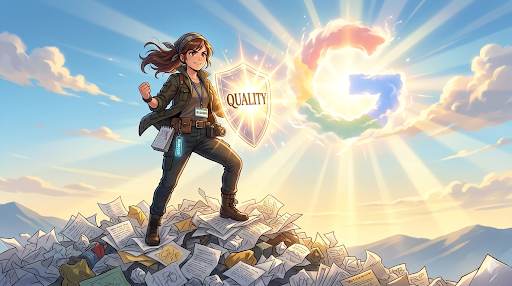
📘 TL;DR – What you’ll learn: Google’s 2026 algorithm no longer rewards content that merely exists. The “good enough” era is over. This guide reveals what high quality content means in 2026, why 96% of content fails Google’s standards, and gives you a 7‑step system to create posts that rank, earn trust, and keep readers coming back. One genuinely helpful post beats fifty shallow articles every time.
🔥 The Content Graveyard
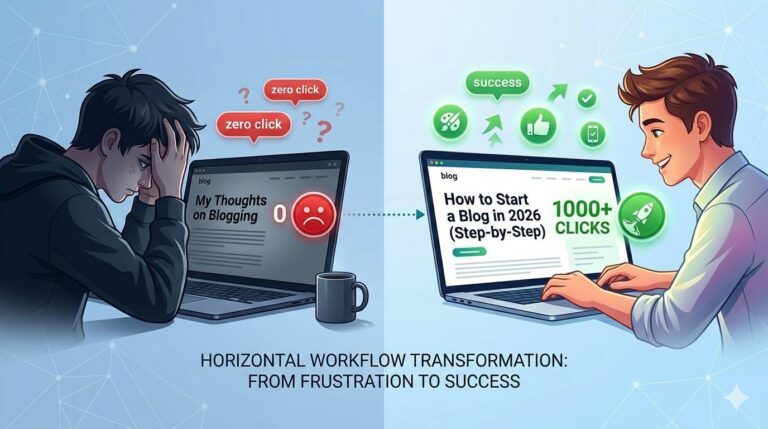
You’ve been publishing consistently. You’ve done keyword research. You’ve even built a few backlinks. Yet your traffic is flat. Your competitors with thinner content are outranking you. You’re frustrated — and you’re not alone, brother.
Here’s the brutal truth the “SEO gurus” won’t tell you: Google’s 2026 algorithm has stopped rewarding content that merely exists. It now rewards content that matters. The December 2025 core update was a massacre for low‑value, AI‑generated, and shallow articles. And the March 2026 update tightened the screws even further.
In this guide, I’ll show you exactly what high quality content means in 2026, why 96% of content fails Google’s new standards, and how to create posts that not only rank but earn trust, shares, and loyal readers. No fluff. No theory. Just the brutal truth and a battle‑tested system.
96.55% of all web pages get ZERO organic traffic from Google. (Ahrefs, 2025)
Before we dive into the system, understand the foundation of trust. My What Is E-E-A-T? guide explains the credibility framework Google uses to evaluate content. And to track how your quality improvements affect performance, set up Google Search Console for Blogger – it shows you exactly which pages are ranking and which need improvement.
🔥 Real story – How a dead blog revived itself with quality (no new posts)
A lifestyle blog had 200 posts and 300 monthly visitors. The owner stopped publishing new content and spent 4 weeks rewriting her 15 most‑visited posts. She added personal stories, original photos, detailed steps, and expert citations. Within 90 days, her traffic grew to 2,400 monthly visitors – an 800% increase without publishing a single new post. Quality > quantity. Every time.
⚠️ The #1 myth that’s destroying your rankings: “More content = more traffic.” False. In 2026, one genuinely helpful, in‑depth post outranks fifty shallow, keyword‑stuffed articles. Google’s Helpful Content System is now a site‑wide signal — and it’s ruthless.
✅ What Exactly Is “High Quality Content” in 2026? (No Theory)
Google’s Search Quality Rater Guidelines (updated March 2026) define high quality content through three lenses:
- Purpose: The page must have a beneficial purpose. Is it designed to inform, teach, or help? Or just to rank?
- E‑E‑A‑T: Experience, Expertise, Authoritativeness, Trustworthiness. Have you actually done what you’re writing about? Can readers trust you?
- User satisfaction: Does the content keep people on the page? Do they click away immediately? Do they share, comment, or return?
In plain English: high quality content is content that a real person would bookmark, share with a friend, or use to solve a problem. That’s it. If your post doesn’t do that, Google will demote it.
📊 Why Google Raised the Bar (The Data That Will Shock You)
400% increase in AI‑generated content in 2025 alone. Most of it low‑value.
Here’s what happened: In 2025, the web was flooded with templated, repetitive, AI‑churned content. Bloggers used tools to generate 50 articles a day. Results? Users couldn’t find real answers. Bounce rates soared. Google’s mission to deliver the best answer was failing.
So Google fought back. The December 2025 Core Update targeted “scaled content abuse” — sites producing mass volumes of low‑quality content. Sites that relied on AI‑generated fluff saw traffic drops of 50‑90%. The March 2026 update extended the crackdown to affiliate sites and e‑commerce.
The message is clear: publish high quality content, or disappear from search results.
❌ 6 Signs Your Content Is NOT High Quality (Be Honest)
- Generic statements without specific examples. “Drink more water” vs “I struggled with dehydration until I started using this water tracker app – here’s how it helped.”
- No original images or screenshots. Stock photos everywhere. No proof you’ve actually done the work. Use Canva to create original graphics and Grammarly to polish your writing.
- Walls of text with no subheadings. Readers can’t skim. They leave after 10 seconds.
- No author bio or real name. “Admin” or “Team” – huge trust killer.
- No internal links to related posts. You’re not guiding readers; you’re letting them disappear. For a complete guide to structuring your content, read Blogger SEO Checklist – it covers categories, meta tags, and internal linking.
- Vague, unhelpful conclusions. “Thanks for reading” vs “Now pick one tip and try it today. Leave a comment with your result.”
💡 Pro Tip: Read your last post out loud. If you feel bored, your readers are already gone. Rewrite it until it feels like a conversation with a friend.
📋 The 7‑Step System to Create High Quality Content That Ranks
Step 1 – Start with a Real Question (Not a Keyword)
Go to Reddit, Quora, or Facebook groups. Find a question someone is truly struggling with. Your content must answer that specific question. Do not write “10 ways to save money.” Write “How I saved $500 on groceries as a single mom (step‑by‑step).”
Step 2 – Outline with Headings Before You Write a Single Word
Use H2 and H3 to create a logical flow. Each section should cover one sub‑question. A clear outline prevents rambling and ensures you don’t miss critical points.
Step 3 – Write in First Person, Like You’re Talking to One Person
Use “I,” “we,” “you.” Share your personal experiences, failures, and lessons. AI can’t do this. Generic third‑person content feels like a textbook – nobody finishes textbooks.
Step 4 – Add Original Proof (Screenshots, Photos, Data)
If you’re reviewing a tool, include a screenshot of your account. If you’re teaching a recipe, show your own photo of the finished dish. If you’re sharing a strategy, include a graph of your results. Original proof is the #1 trust signal.
Step 5 – Format for Skimmers (Because Most People Scan)
Use short paragraphs (2‑4 sentences). Add subheadings every 200‑300 words. Bold key phrases. Use bullet points. Break long lists into numbered steps. Make it impossible to miss the value.
Step 6 – Edit Ruthlessly (Cut 20% of Your Words)
After you finish writing, delete every sentence that doesn’t help the reader. Remove adverbs (“very,” “really,” “extremely”). Replace passive voice with active. Read it aloud – if it sounds awkward, rewrite it.
Step 7 – End with a Specific, Actionable CTA
Don’t just say “thanks for reading.” Tell them exactly what to do next: “Which of these 3 tips will you try first? Let me know in the comments.” Or “Download my free checklist here.” Guide them.
🤖 Can You Use AI to Create High Quality Content?
Yes – but only as a junior assistant, not the author. Here’s how to use AI without getting penalized:
- Use AI to brainstorm headlines or generate outline ideas.
- Use AI to rephrase awkward sentences you’ve written.
- Use AI to suggest related questions for FAQ sections.
- Never copy‑paste AI output directly. Always rewrite, personalize, and add your own examples.
Google’s systems can detect low‑effort AI content. It will be buried. Your human voice, experience, and original insights are your only competitive advantage. For a complete guide, read AI Content Writers for Beginners – it covers how to use AI ethically and effectively.
💡 The Brutal Truth (Read This Twice)
Most bloggers think the answer to their traffic problems is more content. They publish faster, shorter, and shallower. But Google’s 2026 algorithm is designed to bury that content.
The lifestyle blog that revived itself without publishing new posts proves the point: quality matters more than quantity. One genuinely helpful, deeply researched, personally experienced post is worth fifty empty articles.
High quality content is not about length. It’s about depth. It’s about proving you’ve actually done the work. It’s about helping one person completely. That is what Google rewards in 2026.
⚠️ Remember: One genuinely useful post is worth fifty shallow articles. Spend 4‑6 hours on a single, in‑depth, 2,000+ word post that solves one problem completely. Then promote it. That is how you win in 2026.
📅 Your 30‑Day High Quality Content Transformation Plan
Week 1 – Audit & delete
- Review your 20 most‑visited posts. Flag any that are thin (<800 words), generic, or lack personal experience.
- Delete or unpublish posts that truly add no value (Google will thank you).
Week 2 – Rewrite your 5 most important posts
- Add a personal story or lesson learned.
- Replace stock photos with original images.
- Add internal links to your other relevant posts.
- Rewrite the introduction to hook readers in 2 sentences.
Week 3 – Upgrade your author credibility
- Add a real author bio (name, photo, credentials) to every post.
- Create an About page that tells your authentic story.
- Link to your LinkedIn or professional profile.
Week 4 – Publish ONE high quality post (not five mediocre ones)
- Spend 4‑6 hours on a single, in‑depth, 2,000+ word post that solves one problem completely.
- Promote it on Pinterest, LinkedIn, and relevant communities.
- Track its performance for 30 days – watch it outrank dozens of shallow competitors.
After 30 days, your blog will start earning the rankings it deserves.
🙋 Frequently Asked Questions
How long does it take to see ranking improvements after upgrading content?
Typically 4‑8 weeks. Google needs time to recrawl and reevaluate. Be patient and keep publishing quality.
Do I need to be a subject matter expert?
You need demonstrated experience. That can come from personal trial, research, or hands‑on work. Be honest about your level of expertise – don’t pretend to be a doctor if you’re not.
Can short posts be high quality?
Yes, if they answer the question completely. A 400‑word post that solves a specific problem is better than a 2,000‑word post that rambles. Length is not quality; depth is.
How do I measure if my content is high quality?
Track time on page, bounce rate, comments, shares, and return visits. If these metrics improve, you’re on the right track.
🎤 Final Thoughts: The Era of “Good Enough” Is Over
You have a choice. You can keep publishing shallow, rushed, generic posts and watch your traffic slowly evaporate. Or you can embrace the new standard: high quality content that actually helps people.
The bloggers who will thrive in 2026 are not the ones who write the most. They’re the ones who write the best. One genuinely useful, deeply researched, personally experienced post is worth fifty empty articles.
Start today. Pick one post. Make it unforgettable. Add your voice. Prove your expertise. Help one person completely. Then do it again. That’s how you win in 2026.
You’ve got this, brother. 🚀
👉 Ready to create high quality content that Google will finally reward? Open your Blogger dashboard. Pick one old post. Rewrite it with personal experience, original images, and a clear CTA. Start today.