Blogging Community 101: Connect, Grow, Succeed (2026)
📘 TL;DR – What you’ll learn: Blogging alone is a trap. Without a community, your blog stays invisible. This guide gives you a 4‑stage roadmap to build your blogging community: break isolation, find your tribe, engage like a human, and turn connections into collaborations. Stop struggling alone. Start growing with people who care.
🔥 The Loneliness of Blogging Alone
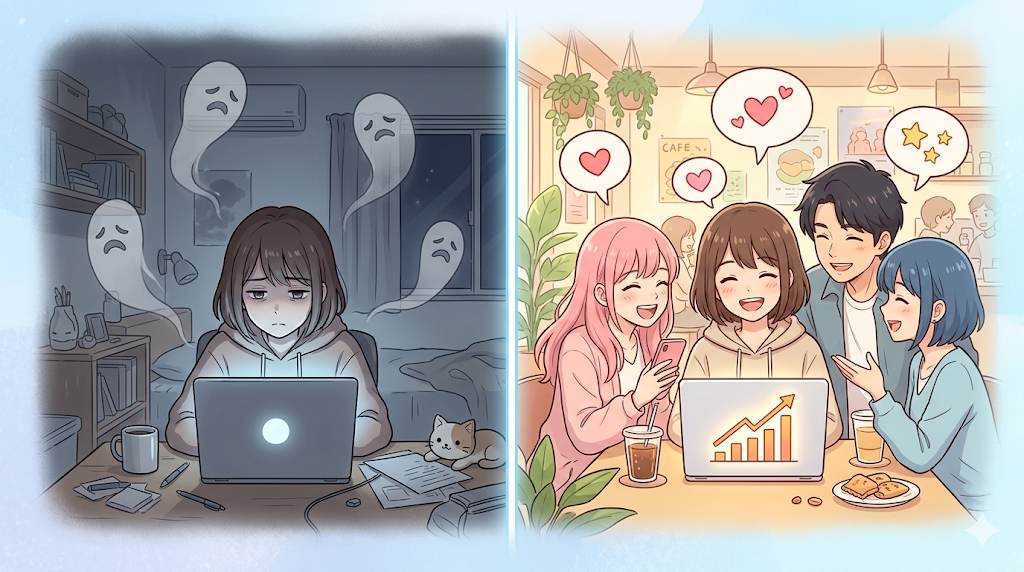
Let me tell you something, brother. I understand exactly how you feel. You sit for hours writing, researching keywords, and optimizing images. Then you hit publish… and nothing happens. No comments. No shares. No one seems to care. You feel like you’re screaming into a void. And you start wondering: Is the problem me? Am I a bad writer?
Here is the truth I need you to hear right now. The problem is not you. The problem is that you thought blogging was a solo sport. But the truth is, blogging is a conversation. Without a community, you are invisible. I have been there too. It almost broke me.
This is not another fluffy “just be social” guide. This is a 4‑stage, battle‑tested roadmap to escape isolation, build genuine connections, and finally grow your blog with people who actually care.
Before you start building your community, make sure your content is worth sharing. My Audience Engagement Metrics guide shows you how to track what keeps readers engaged. And to promote your content once your community grows, read 8 Free Traffic Strategies – it covers Pinterest, Quora, and Facebook groups, which are perfect places to find your tribe.
📌 Real story – How one Facebook group changed everything
For six months, I blogged alone. I published 40 posts. My traffic was stuck at 50 visits per day. I was exhausted and ready to quit. Then I joined a small Facebook group for beginner bloggers. Within two weeks, I got feedback on my writing, someone shared my post, and I gained 200 new visitors. My content didn’t change. My community did. I stopped struggling and started growing.
⚠️ The real reason your blog isn’t growing: You are treating blogging like a solo sport. But blogging is a conversation. Without a community, you are invisible. You are not failing at content. You are failing at connection.
✅ Why Blogging Alone Is a Trap (The Hard Truth)
Blogging is marketed as an independent journey. Pick a niche. Write great content. Traffic will come. This is a lie. Research shows that bloggers who participate in communities have higher motivation, better feedback, and significantly faster growth. When you blog in isolation:
- You learn slower. You spend weeks figuring out problems someone else could solve in minutes.
- You lose motivation. Without encouragement, burnout is inevitable.
- You miss opportunities. Collaboration is how small blogs become big blogs.
And most dangerously, writing in silence without feedback creates feelings of loneliness, anxiety, and depression. A blogging community is not a “nice to have.” It is essential for your sanity and your success.
📋 The 4‑Stage Roadmap to Building Your Blogging Community
1
Break Your Isolation (The Psychological Shift)
🔥 Why most beginners stay stuck: They believe they have to be “successful enough” before joining a community. This is backward. You join a community to become successful.
✅ Your action plan:
- Admit the struggle out loud. Tell yourself: “I am not failing. I am learning. And I don’t have to learn alone.” This admission frees you.
- Destroy comparisonitis. The “big bloggers” you admire also started with zero comments. They just found their people earlier.
- Commit to 14 days of community activity. No results needed. Just show up and participate. This breaks the isolation cycle.
2
Find Your Tribe (Where to Look in 2026)
Not all communities are created equal. Here are the best places to find serious, supportive bloggers in 2026:
- Facebook Groups. Search “[your niche] bloggers” or “blogging support group.” The best groups have active moderators and clear rules.
- Reddit Subreddits. r/blogging, r/BloggingTips, and niche‑specific subreddits are goldmines for honest feedback.
- Discord & Slack Communities. Smaller, more focused, and less noisy. Look for invites in blogging newsletters.
- Micro‑Communities. Groups with fewer than 100 members often provide the deepest connections.
🎯 Pro tip: Join 2‑3 communities max. Being active in 2 groups beats being silent in 10.
3
Engage Like a Human (Not a Spammer)
❌ What doesn’t work: Dropping your link and running. “Check out my new post!” with zero context.
✅ The engagement formula that builds real relationships:
- Lurk first (at least 3 days). Read the rules, observe the tone, and notice who the active members are.
- Introduce yourself with specifics. “Hi, I’m [name]. I write about [specific topic] for [specific audience]. I’m currently struggling with [specific problem]. Would love to learn from you.”
- Give before you ask. Reply to 3 posts with genuine value before sharing anything of your own.
- Use the 80/20 rule. 80% of your interactions should be helping others. 20% can be sharing your own content.
4
Turn Connections into Collaborations (The Growth Engine)
This is where the magic happens. Communities are not just for emotional support. They are your launchpad for growth.
- Start a “small collaboration pod.” Invite 3‑5 active members to a WhatsApp or Messenger group. Commit to sharing each other’s posts, leaving thoughtful comments, and giving honest feedback.
- Propose a guest post exchange. “I’ll write a post for your blog about [topic], and you write one for mine.” This builds backlinks and exposes you to new audiences.
- Create a “content swap” system. You share their post on your social media. They share yours. Simple, effective, and builds authority.
💡 Pro Tip: Active community participation is a powerful trust signal for Google. When readers comment, share, and return to your site, search engines see your content as valuable. Building a community is not just “feel good” — it is a direct SEO strategy.
For a complete guide to promoting your content within your community and beyond, read Publish Less, Promote More – it covers the 80/20 rule and how to share your work without being spammy.
💡 The Brutal Truth (Read This Twice)
Most bloggers think the answer to their traffic problems is more SEO, better keywords, or fancier design. But the real problem is isolation. You cannot build a blog that people care about if you never connect with people.
I wasted six months blogging alone. I was exhausted, frustrated, and ready to quit. Then I joined a small community, and everything changed. My content didn’t improve overnight. But I had people to share it with. I had feedback. I had encouragement. And that made all the difference.
A blogging community is not a distraction from your work. It is the engine that will finally make your work visible. Find your people. Give before you take. Show up consistently. And watch your blog transform from a lonely hobby into a thriving connection.
⚠️ Remember: You don’t have to do this alone anymore. Go find your tribe. The best time to join was yesterday. The second best time is now.
📅 Your 30‑Day Community Growth Action Plan
- Week 1 – Break Isolation: Join 2 blogging communities. Observe and introduce yourself.
- Week 2 – Give Value: Answer 5 questions daily. Do not share your own links yet. Build trust.
- Week 3 – Ask for Feedback: Share your best post and ask for 3 specific improvements.
- Week 4 – Collaborate: Propose one collaboration (guest post, content swap, or social share).
- Month 2‑3: Rinse and repeat. Your network expands. Your traffic grows. Your loneliness disappears.
After 30 days, you will have a network of supportive bloggers – and your traffic will finally start moving.
🙋 Frequently Asked Questions
What if I’m too shy to participate in groups?
Start by lurking. Then comment on one post per day. Small steps build confidence. The community is designed for people like you.
How long until I see results?
Within 2‑3 weeks of consistent engagement, you will notice more comments, shares, and traffic. Real collaboration results take 1‑2 months. Be patient.
What if my niche doesn’t have an active community?
Create one. Start a Facebook group or subreddit for your niche. You will be surprised how many people are waiting for a leader.
Can a blogging community really improve my SEO?
Yes. User‑generated content (comments, shares) signals relevance to Google. Plus, collaborations naturally build backlinks.
🎤 Final Thoughts: The Best Time to Join Was Yesterday. The Second Best Time Is Now.
You have spent months trying to grow alone. You have read SEO guides, optimized your headlines, and learned keyword research. But nothing changed. Because the missing piece was never technical. It was human.
A blogging community is not a distraction from your work. It is the engine that will finally make your work visible. Find your people. Give before you take. Show up consistently. And watch your blog transform from a lonely hobby into a thriving connection.
You don’t have to do this alone anymore. Go find your tribe.
You have got this, brother. 👥
👉 Ready to stop struggling alone and start growing with a community? Search “[your niche] bloggers” on Facebook. Join 2 groups. Introduce yourself today.