SEO Success in 2026: A Simple, Proven Strategy That Actually Works
📘 TL;DR – What you’ll learn: SEO success is not about hacking Google – it’s about showing up when people search for what you offer. This guide gives you a simple, proven strategy: understand your audience, do smart keyword research, create helpful content, fix technical issues, use internal linking, earn backlinks, and track your progress. In 90 days, you’ll see real results without any shortcuts.
🔥 The Overwhelm That Stops Most Bloggers
Let me be real with you, brother. Ever feel like SEO is just too complicated to get right? You’re not alone. The truth is, SEO success isn’t about hacking Google or chasing mysterious algorithms — it’s about showing up when people search for what you offer. Most people don’t fail at SEO because they’re bad — they fail because they focus on the wrong things.
Before we dive into the strategy, understand the foundation of SEO success. My AI Keyword Research Tools for Beginners guide covers 7 free tools to find the right keywords. And to track your progress, set up Google Search Console for Blogger – it’s free and shows you exactly which keywords bring visitors to your blog.
📌 The short truth: SEO success is when your website consistently shows up on Google for the right keywords — the ones your audience is actually searching for — and turns that visibility into real results: traffic, leads, and sales. In simple terms: you help the right people find you, and they stick around.
✅ What Does “SEO Success” Actually Mean?
SEO success is when your website consistently shows up on Google (and other search engines) for the right keywords — the ones your audience is actually searching for — and turns that visibility into real results: traffic, leads, and sales.
In simple terms: You help the right people find you, and they stick around.
🧠 But Wait, How Does SEO Actually Work?
Let’s make it super simple. Google wants to show people the most helpful results. Your job is to be that helpful result.
To do that, your site needs to be:
- Easy to find (search engines can crawl and index it)
- Easy to understand (clear structure, strong keywords)
- Useful (answers real questions, loads fast, mobile‑friendly)
When you get that mix right, Google starts trusting you more — and ranking you higher.
💡 What Do I Need to Do to Succeed with SEO?
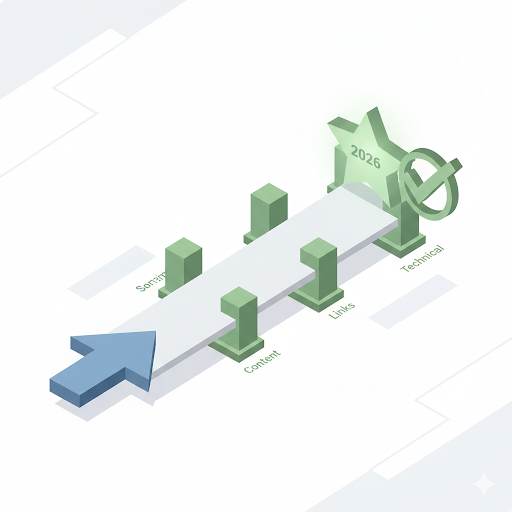
Here’s your SEO success roadmap in 2026:
1. Start with Your Audience
- Who are they?
- What are they struggling with?
- What are they typing into Google?
Knowing this is the foundation of SEO. Without it, every other effort will fall flat.
2. Do Smart Keyword Research
Use free tools like: Google Search (auto‑suggest + People Also Ask), Ubersuggest, AnswerThePublic. Look for low‑competition, long‑tail keywords — the kind real beginners search for.
Example: “how to start a blog in 2026” vs just “blog”. For a complete guide to finding the right keywords, read AI Keyword Research Tools for Beginners – it covers 7 free options to find low‑competition keywords.
3. Create Helpful, Simple, Human Content
Write like you’re talking to one curious person — not a robot or a search engine.
Make your content: easy to read, well‑structured (use H2s and H3s), focused on solving one clear problem.
Important: Don’t just repeat keywords. Add value. Use Canva to create visuals that support your content.
4. Fix Technical SEO Issues
Make sure your site is: mobile‑friendly, fast‑loading, indexed by Google, free of broken links or errors. Use tools like Google Search Console and PageSpeed Insights to catch problems early.
5. Use Internal Linking
Link your articles together naturally. If someone’s reading about “SEO for beginners,” link them to your post on “On‑Page vs Technical SEO.” It keeps readers engaged, and Google loves it. For a complete guide, read Internal Linking – it shows you how to build a web of content that keeps readers on your site.
6. Get Backlinks (the Right Way)
Backlinks = trust signals from other sites. You can earn them by: guest posting, creating valuable free tools, writing content worth sharing. Avoid spammy tactics. Focus on building real authority.
7. Track Your Progress
Use: Google Analytics (to track visitors and behavior), Google Search Console (to monitor rankings and indexing). Check your progress monthly — not daily.
❌ Beginner Mistakes That Kill SEO Success
- Targeting keywords that are way too competitive
- Ignoring search intent (writing what YOU want, not what THEY search for)
- Using keyword stuffing (Google hates it)
- Writing boring, generic content
- Not optimizing for mobile
- Forgetting about internal linking
- Giving up too soon (SEO takes time — months, not days)
🎯 How Do You Know When You’re Winning?
Signs of SEO success include:
- More organic traffic
- Higher rankings for your target keywords
- More clicks, comments, and shares
- Better engagement on your site
- Sales or leads coming in from Google
Even small wins matter. If you’re seeing steady progress month by month, you’re on the right track.
💡 The Brutal Truth (Read This Twice)
Most beginners think SEO success is about finding a secret hack or trick. They chase the latest algorithm update, buy cheap backlinks, or stuff keywords into their content. None of that works.
SEO success in 2026 is simpler than you think: understand your audience, create content that helps them, and make your site easy for Google to find and trust. That’s it. No magic. Just consistency.
The bloggers who succeed are not the ones who know the most SEO tricks. They are the ones who show up, week after week, writing content that actually helps people. That’s the real secret. And you already have what it takes to do that.
⚠️ Remember: SEO success is a marathon, not a sprint. One optimized post won’t change your traffic overnight. But 50 optimized posts over a year will. Start with one post. Apply the strategy. Then repeat.
📅 Your 30‑Day SEO Success Action Plan
- Week 1: Define your audience. List their top 5 problems.
- Week 2: Find 10 low‑competition keywords using Ubersuggest or AnswerThePublic.
- Week 3: Write and publish one in‑depth post around a keyword. Optimize title, URL, and meta description.
- Week 4: Add internal links to 3 older posts. Submit your sitemap to Google Search Console.
- Month 2‑3: Repeat weekly. Track your rankings. Adjust based on what works.
In 90 days, you’ll see real SEO progress — without any shortcuts or black‑hat tricks.
🙋 Frequently Asked Questions
How long does SEO take to work?
Typically 3‑6 months to see meaningful results. SEO is a long‑term game. Be patient and consistent.
Do I need to be a tech expert to succeed at SEO?
No. Most SEO success comes from understanding your audience and creating helpful content. Technical SEO matters, but basics cover 80% of the work.
What’s the most important SEO factor in 2026?
Content quality and user experience. Google’s E‑E‑A‑T framework (Experience, Expertise, Authoritativeness, Trustworthiness) is now critical.
Can I do SEO on a free platform like Blogger?
Yes. Blogger supports custom meta tags, clean URLs, and internal linking.
🎤 Final Thoughts: SEO Success Is Simpler Than You Think
You don’t need to master every little SEO trick. You don’t need a huge budget. You do need to stay consistent, learn what works, and focus on your audience. Write content that helps real people. Make your site easy to navigate. And stick with it.
That’s the real secret to SEO success in 2026.
Your SEO journey starts today. And trust me — you’ve got this, brother. 🚀
👉 Ready to start your SEO success journey today? Set up Google Search Console (free). Track your rankings. Find what’s working. Double down. Start winning.