Your Traffic Is Useless Without Conversion Rate Optimization 2026
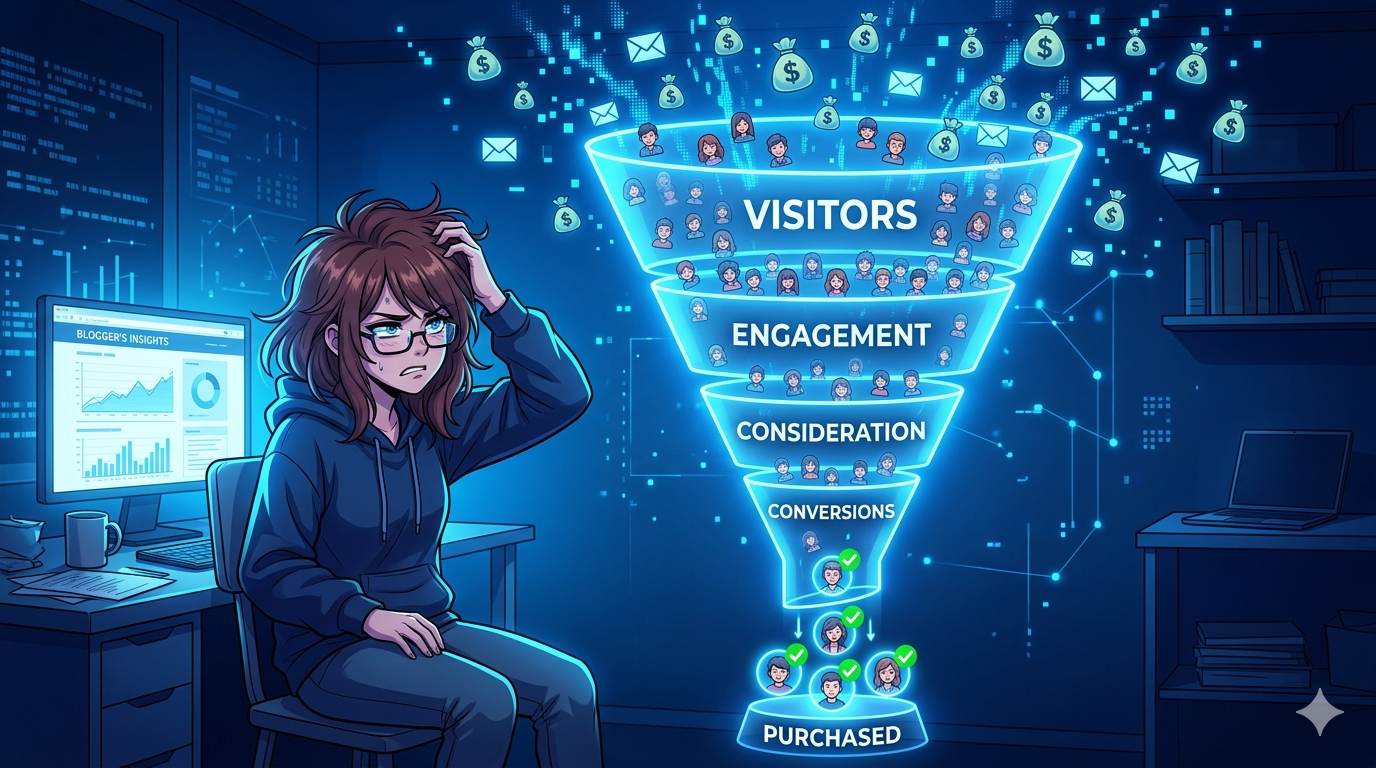
📘 TL;DR – What you’ll learn: Getting traffic is only half the battle. If visitors don’t take action, your traffic is useless. Conversion rate optimization (CRO) helps you turn more visitors into subscribers, buyers, or engaged readers. This guide explains why conversions are hard in 2026, gives you a 6‑step CRO framework, and shows you how to fix common leaks – without spending on ads.
🔥 The Heartbreak of Wasted Traffic
You spend hours on SEO, social media, and content creation. You watch your traffic grow. You feel proud. Then you check your conversions — and your heart sinks. 500 visitors. 10 signups. 2 sales. Maybe less. Sometimes zero, brother.
The problem isn’t your traffic. The problem is what happens after people arrive.
Conversion rate optimization (CRO) is the missing piece most beginners ignore. They chase more visitors while their existing traffic leaks away. But the smartest bloggers know the real growth hack is not getting more people to your site — it’s getting more value from the people already there.
In this guide, I’ll explain conversion rate optimization in plain English, show you exactly why your visitors aren’t converting, and give you a proven 6‑step plan to turn traffic into revenue — without spending a dime on ads.
Before you optimize for conversions, make sure you’re tracking the right data. My Audience Engagement Metrics guide shows you the 6 numbers that predict blog growth, including conversion‑related metrics. And to identify where visitors drop off, read User Experience for Beginners – it covers 7 UX mistakes that kill engagement and conversions.
📌 Real story – How a single headline change tripled my conversions
A few years ago, I was stuck at a 2% conversion rate. I had traffic, but nobody was signing up for my email list. I almost gave up. Then I changed one thing — my headline. Old headline: “Subscribe to My Newsletter” — New headline: “Get Weekly Freelance Tips (Free)” — That small change tripled my signups. Same traffic. Same offer. Same page. The only thing I changed was how I asked. That’s the power of CRO. You can do the same.
⚠️ The #1 myth about conversion rate optimization: “I need more traffic before I worry about conversions.” False. If your site can’t convert 100 visitors, it won’t convert 10,000. Fix your conversion rate first. Then scale your traffic. It’s more efficient and less expensive.
✅ What Is Conversion Rate Optimization? (Simple Definition)
Conversion rate optimization is the process of increasing the percentage of website visitors who complete a desired action. That action could be signing up for your email list, clicking an affiliate link, buying a product, filling out a contact form, or even just reading another post.
Here’s how to calculate your conversion rate: (Conversions ÷ Total visitors) × 100. If 500 people visit your signup page and 15 subscribe, your conversion rate is 3%. If you improve that to 6%, you just doubled your results — without a single new visitor.
CRO is not a one‑time project. The businesses that treat it as an ongoing practice consistently outperform their competitors.
📊 Why Getting Conversions Is Harder Than Ever in 2026
The digital landscape in 2026 is noisier than at any point in marketing history. AI has made it dramatically easier for every marketer to flood every channel with offers, posts, and content. More emails are going out. More social content is being published. Getting conversions now requires doing many small things consistently — not finding one big silver bullet.
Here’s what that means for you: generic conversion advice won’t cut it anymore. You need a system tailored to your audience. You need to understand why people aren’t converting on your site and remove those specific barriers. That’s what we’ll cover next.
🚫 Why Your Traffic Isn’t Converting (6 Silent Killers)
- Unclear value proposition. Visitors don’t understand what you offer or why it matters to them within seconds of landing on your page.
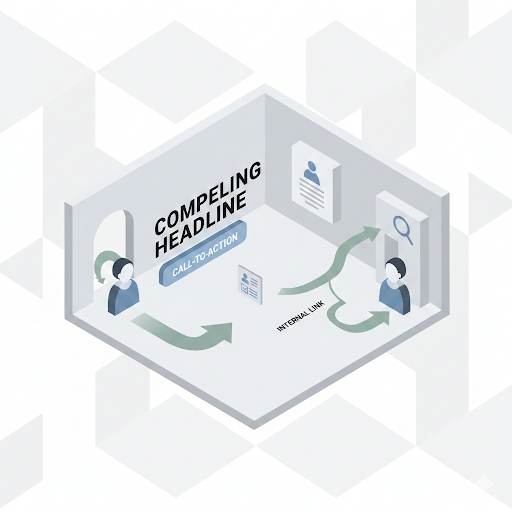
- Weak or buried call‑to‑action (CTA). If your CTA button says “Submit” instead of “Get My Free Guide,” or if it’s hidden below the fold, people won’t click.
- Too many distractions. Multiple CTAs, sidebar clutter, and competing offers confuse visitors. One page, one goal.
- Poor mobile experience. Over 60% of web traffic is mobile. If your site is hard to use on a phone, you will lose most of your conversions.
- No social proof. Testimonials, reviews, and trust badges build credibility. Without them, visitors hesitate.
- Generic, robotic copy. Formal, jargon‑filled language creates distance. People convert when they feel understood, not when they’re reading a corporate memo. For help writing better copy, read 10 Essential Blog Writing Tips.
📋 A 6‑Step CRO Framework for Beginners
1
Define ONE Clear Goal Per Page
What is the single most important action you want visitors to take? Do not confuse them with multiple options. One page, one goal.
Examples: On your homepage → email signups. On a blog post → clicks to a related post or affiliate link. On a product page → purchases.
2
Measure Your Current Conversion Rate
You cannot improve what you do not measure. Use Google Analytics or Google Search Console to find your baseline. Calculate your rate: (Conversions ÷ Total visitors) × 100. Write it down. This is your starting point.
3
Identify Where Visitors Are Dropping Off
Before you change anything, understand where visitors are leaving. A conversion funnel audit identifies your biggest leaks. Look at bounce rate by page, exit rate by page, form abandonment rate, and time on page. Use free tools like Microsoft Clarity (heatmaps and session recordings) to watch how real visitors use your site. That data is gold for CRO.
4
Optimize Your Call‑to‑Action (CTA)
Your CTA should be impossible to miss. Use action‑oriented, benefit‑driven language — not generic words like “Submit” or “Click Here.” Place it prominently, especially above the fold. Test different colors and placements, but never hide your CTA.
Examples: ❌ “Subscribe” → ✅ “Get Weekly Tips (Free)” ❌ “Learn More” → ✅ “Show Me the Steps”
5
Write Like a Human (Kill the Jargon)
People convert when they feel understood. Write short sentences. Use “you.” Be conversational. Read your copy out loud. If it sounds awkward, rewrite it. Use tools like Grammarly to polish your writing.
Before: “Our comprehensive solution leverages cutting‑edge technology to optimize your workflow.”
After: “This tool saves you 2 hours every day. Try it free.”
6
Test One Change at a Time (Then Repeat)
Do not redesign your entire page overnight. Pick one variable: headline, button color, CTA text, image, or form length. Change only that. Run the test for 1‑2 weeks (or until you have sufficient data). Compare results. Keep what works. Discard what doesn’t. Then start again.
Remember: CRO is an ongoing practice, not a one‑time project.
💡 Pro Tip: Start with your most visited page. A small improvement on a high‑traffic page will have a bigger impact than a large improvement on a low‑traffic page. Prioritize pages that already get visitors but underperform.
🛠️ Free Tools to Boost Your Conversion Rate (No Budget Needed)
- Google Analytics: Track your conversion rates and see which pages perform best.
- Google Search Console: Identify which keywords bring traffic and whether your pages are indexed properly.
- Microsoft Clarity: Free heatmaps and session recordings. Watch how visitors actually use your site — completely free and privacy‑friendly.
- Canva: Design better buttons, banners, and call‑to‑action graphics.
- Grammarly: Fix awkward sentences that might confuse readers.
❌ Common Beginner Mistakes That Kill Your Conversions
- ❌ Too many CTAs. One page, one goal. Do not ask visitors to do five things.
- ❌ Vague, clever copy. “Submit” is not persuasive. “Get My Free Checklist” is.
- ❌ Ignoring mobile. Over 60% of traffic is mobile. Test your site on your phone. If it’s hard to use, you will lose most of your conversions.
- ❌ Changing too many things at once. You will never know what worked.
- ❌ Not testing long enough. One day of data is not enough. Run tests for at least 1‑2 weeks.
- ❌ Relying on guesswork instead of data. CRO is a structured process of analysis, hypothesis, testing, and measurement. Don’t just change things randomly.
💡 The Brutal Truth (Read This Twice)
Most bloggers obsess over getting more traffic. They buy ads, chase SEO, and post on social media – but they ignore what happens after people arrive. The result? Hundreds of visitors leave without taking any action. Your traffic is useless if nobody clicks, subscribes, or buys.
The difference between a 2% conversion rate and a 5% conversion rate doesn’t sound dramatic until you do the math. For a blog getting 3,000 monthly visitors, that gap represents 90 additional leads per month — without spending another dollar on advertising. Over a year, that is over 1,000 leads you are either capturing or leaving on the table.
Conversion rate optimization is not a secret trick for big companies. It is a simple, systematic way to get more from what you already have. You don’t need more traffic. You need better results from the traffic you already worked for.
⚠️ Remember: A 1% improvement in conversion rate on a page with 1,000 monthly visitors gives you 10 more conversions per month. Over a year, that’s 120 conversions – without a single new visitor. Small changes compound.
📅 Your 7‑Day Conversion Rate Optimization Action Plan
- Day 1: Pick one high‑traffic page. Define one clear conversion goal.
- Day 2: Calculate your current conversion rate using Google Analytics.
- Day 3: Watch 5‑10 session recordings on Microsoft Clarity. Note where visitors hesitate or leave.
- Day 4: Write 3 alternative headlines. Pick the strongest.
- Day 5: Improve your CTA button (text and color). Make it impossible to miss.
- Day 6: Test your page on mobile. Fix one issue (font size, spacing, button size).
- Day 7: Implement one change (e.g., new headline or CTA). Track results for 2 weeks. Then repeat.
In one month, you will see real improvement — without buying more traffic.
🙋 Frequently Asked Questions
Do I need a lot of traffic to start CRO?
No. You can start with as few as 100 visitors per month. For pages with lower traffic, track over a longer period (4‑6 weeks) to get reliable data. The principles work at any scale.
How long does it take to see results?
Some changes show results within days. Significant improvements usually take 2‑4 weeks of consistent testing. CRO is a process of continuous improvement.
Is CRO the same as A/B testing?
A/B testing is one method of CRO. CRO also includes improving copy, design, user experience, and analyzing user behavior — not just running tests.
Can I do CRO without expensive tools?
Yes. Google Analytics, Microsoft Clarity, and Google Search Console are all free and sufficient for beginners. You don’t need paid tools to start seeing improvements.
What if my conversion rate is already good?
There is always room for improvement. Even small gains compound over time and can significantly increase your revenue without additional traffic.
🎤 Final Thoughts: Stop Wasting Your Traffic. Start Converting.
Conversion rate optimization is not a secret trick for big companies. It is a simple, systematic way to get more from what you already have. You don’t need more traffic. You need better results from the traffic you already worked for.
The difference between a 2% conversion rate and a 5% conversion rate doesn’t sound dramatic until you do the math. For a business getting 3,000 monthly visitors, that gap represents 90 additional leads per month — without spending another dollar on advertising. Over a year, that is 1,080 leads you are either capturing or leaving on the table.
You have the power to close that gap. Pick one page. Make one small change. Track the results. Then do it again. Your future self will thank you.
You have got this, brother. 🚀
👉 Ready to turn useless traffic into real results? Install Microsoft Clarity (free). Watch how visitors use your site. Find what’s killing your conversions. Fix it today.